CÔNG TY LUẬT ANT

Công ty Luật hàng đầu Việt Nam

CÔNG TY LUẬT ANT

Tư vấn pháp lý cho tổ chức công ty và cá nhân

CÔNG TY LUẬT ANT

Tư vấn pháp luật uy tín

CÔNG TY LUẬT ANT

Đội ngũ luật sư chuyên nghiệp

CÔNG TY LUẬT ANT

Có nhiều kinh nghiệm và chuyên môn cao

Thứ Năm, 12 tháng 9, 2024

7 Essential Facts About Import Tax into Vietnam You Can’t Afford to Miss

  Vietnam has been becoming a key player in international trade, attracting businesses worldwide. However, understanding import tax into Vietnam can be confusing. With several taxes, tariffs, and regulations, importers must clearly understand how Vietnam’s import tax system works to avoid unnecessary expenses.

In the following, we will through the some aspects of import tax into Vietnam to help you make informed decisions and optimize your import process.


What Is Import Tax into Vietnam?

Import tax into Vietnam, or customs duty, is a tariff imposed by the government on goods brought into a country.

Import tax into Vietnam is crucial for regulating trade and protecting local industries. Depending on the product’s origin, its classification, and specific agreements between Vietnam and other nations, the tax rates can vary.

Let’s explore each type of import tax into Vietnam associated with importing goods into Vietnam, ensuring you’re well-equipped to handle your business efficiently.

1. Import Tax into Vietnam: An Overview

The first tax importers must consider is the import duty itself, determined based on the classification of goods under the Harmonized System (HS) Code, a standardized international system used to categorize products.

After identifying the HS code of the imported goods, importers can determine which specific import duty rates apply.

Import tax into Vietnam varies depending on the country of origin and any trade agreements in place:

MFN Tariff (Most Favored Nation Tariff): This is the standard rate applied to goods coming from World Trade Organization (WTO) member countries. Vietnam adheres to its WTO commitments when setting these tariffs.

Preferential Tariff: If the product’s country of origin has signed a preferential trade agreement with Vietnam, it may be eligible for reduced tariffs. However, to benefit from preferential tariffs, the goods must meet the required rules of origin set by the respective trade agreements.

Importers need to stay updated with annual adjustments to tax policies, as Vietnam revises its import duties regularly, especially in response to changes in international trade agreements.

2. Value Added Tax (VAT)

The second essential tax to account for is Value Added Tax (VAT). In Vietnam, most imported goods are subject to a VAT. VAT is added to the product’s customs value and import duty, meaning it is calculated based on the cost, insurance, and freight (CIF) value of the goods, plus any applicable import duty.

An important point for importers is that VAT can be deducted later if the imported goods are used as inputs in the production of other products. This allows businesses to reclaim the VAT paid during the import process.

VAT Reclaim Example:

If you import raw materials for manufacturing, you can later deduct the VAT you initially paid on those imports when calculating your final tax liabilities, effectively reducing the financial burden.

3. Special Consumption Tax (SCT): For Certain Goods

Not all goods are equal in Vietnam’s tax system. For luxury goods, such as alcohol, cigarettes, and automobiles, Special Consumption Tax (SCT) is applied. SCT is designed to limit the consumption of certain products deemed harmful or non-essential.

Goods subject to SCT include alcoholic beverages, tobacco, cars, and luxury goods.

The rate of SCT varies based on the product category. For example, alcohol may be taxed at a significantly higher rate than other luxury items.

Before importing, businesses must carefully consider whether their products fall under this category, as the SCT can significantly increase the cost of importing certain goods.

4. Environmental Protection Tax (EPT)

Another tax importers must be aware of is the Environmental Protection Tax (EPT). This tax is applied to goods that could harm the environment, such as fuel, pesticides, and coal.

EPT is part of Vietnam’s broader efforts to promote environmental sustainability and discourage the import and consumption of products that negatively impact the environment. EPT rates depend on the product type, with high rates for products like petroleum and fossil fuels.

Common Products Subject to EPT:

Gasoline and petroleum products

Coal

Pesticides and certain chemicals

Importers of such goods need to calculate their EPT obligations when determining the total cost of bringing these products into Vietnam.

5. Anti-Dumping, Countervailing, and Safeguard Duties

Vietnam also enforces anti-dumping tax, countervailing, and safeguard duties to protect local industries from unfair competition or harm caused by foreign imports.

These duties are imposed when investigations determine that certain imported products are being sold at below-market prices, benefiting from subsidies, or causing significant harm to domestic industries.

Anti-Dumping Duties: These are applied when foreign goods are sold in Vietnam at unfairly low prices.

Countervailing DutiesThese are levied when imported goods benefit from unfair subsidies provided by their home country.

Safeguard Measures: Temporary duties are imposed to protect a local industry from a surge of imports that threatens serious damage.

Importers need to be aware of these potential taxes, especially when sourcing products from countries under investigation for such trade practices.

These duties are typically imposed for a limited period and can significantly impact the cost of importing affected products.

6. Understanding Free Trade Agreements (FTAs) and Tariff Benefits

Vietnam has signed several Free Trade Agreements (FTAs) with key global partners, including the Comprehensive and Progressive Agreement for Trans-Pacific Partnership (CPTPP), the EU-Vietnam Free Trade Agreement (EVFTA), and the Regional Comprehensive Economic Partnership (RCEP). These agreements lower import tax into Vietnam on certain products, fostering easier trade relations with countries that are part of these pacts.

If your goods are eligible for preferential tariffs under these agreements, you could see significant savings. However, navigating the requirements of these agreements can be complex, as they typically involve strict rules of origin and certification processes.

Example:

Under the EVFTA, goods imported from the European Union may benefit from reduced tariffs, provided they meet the stipulated rules of origin. Importers should always verify the latest updates in FTAs to maximize tariff benefits.

7. The Import Process and Compliance with Vietnamese Customs

Successfully importing goods into Vietnam involves more than just calculating taxes. To ensure a smooth customs clearance process, importers must be fully compliant with Vietnam’s regulatory requirements, which include:

  • Correct product classification under the HS Code
  • Submission of necessary documentation (invoices, packing lists, certificates of origin, etc.)
  • Payment of all relevant taxes and duties

Failing to meet these requirements can result in delays, fines, or even the confiscation of goods.

Common Pitfalls to Avoid:

  • Incorrectly classifying goods, leading to overpayment or underpayment of taxes.
  • Failing to update tariffs based on new trade agreements or changes in the law.
  • Neglecting to comply with product-specific regulations, such as those for food and pharmaceuticals.

Conclusion: Import Tax into Vietnam

Importing goods into Vietnam can be a complex process, with numerous taxes and regulations to consider. Understanding the different taxes—such as import duties, VAT, SCT, EPT, and safeguard measures—will help you avoid costly mistakes and optimize your import operations. By staying informed about trade agreements and Vietnamese customs procedures, you can take advantage of preferential tariffs and ensure compliance with local laws.

About ANT Lawyers, a Law Firm in Vietnam

We help clients overcome cultural barriers and achieve their strategic and financial outcomes, while ensuring the best interest rate protection, risk mitigation and regulatory compliance. ANT lawyers has lawyers in Ho Chi Minh city, Hanoi,  and Danang, and will help customers in doing business in Vietnam.

Source: https://antlawyers.vn/update/import-tax-into-vietnam-7-facts.html
Thứ Hai, 9 tháng 9, 2024

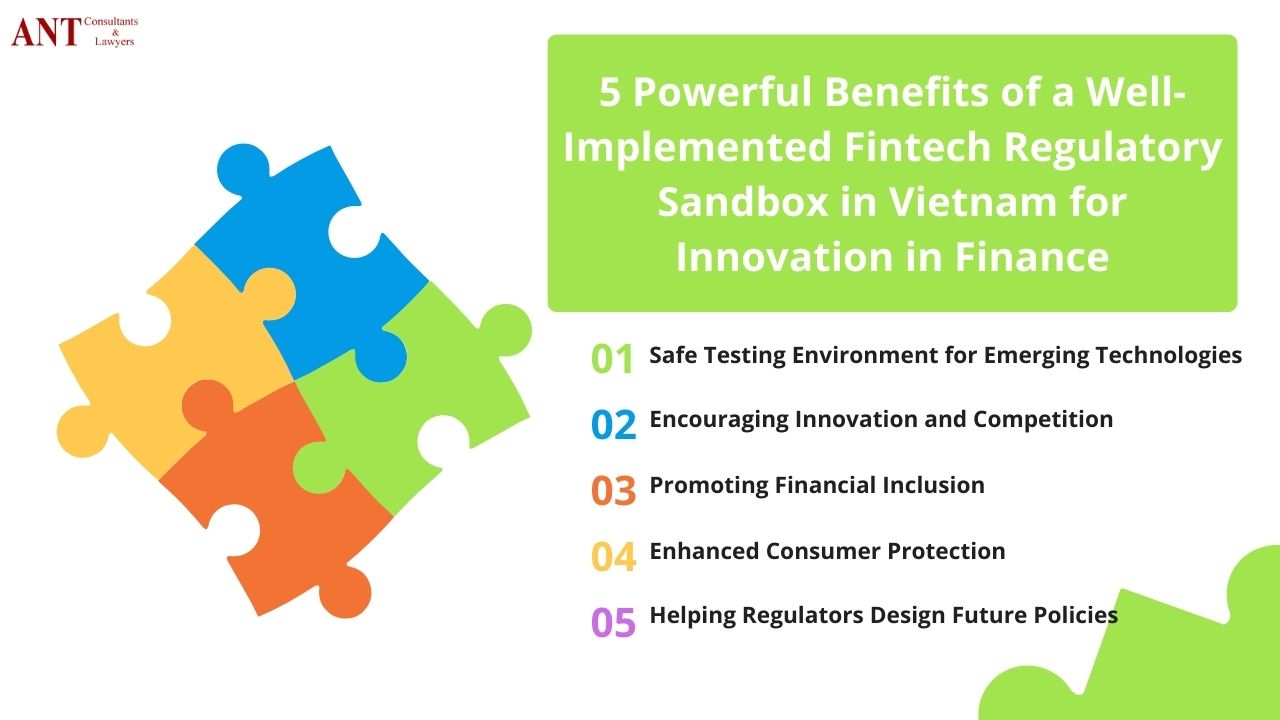
5 Powerful Benefits of a Well-Implemented Fintech Regulatory Sandbox in Vietnam for Innovation in Finance


The Need for a Fintech Regulatory Sandbox in Vietnam

The banking and financial sectors are undergoing a significant transformation as financial technology, or Fintech, reshapes traditional practices. In response, governments and regulatory bodies worldwide are exploring controlled environments to test new financial technologies. Vietnam does not want to be the outsider hence it is planning to implement the Fintech regulatory sandbox in Vietnam. This sandbox allows for innovative financial solutions to be trialed within a controlled and monitored setting, helping to mitigate risks while fostering innovation.

In Vietnam, the government has recently recognized the importance of establishing a sandbox for the banking sector.

As proposed in recent regulatory documents, Draft Documents on Controlled Mechanism of Fintech Regulatory Sandbox in Vietnam, drafted by the State Bank of Vietnam to the government, the Fintech regulatory sandbox in Vietnam will play a crucial role in enabling financial institutions to innovate safely, especially when adopting technologies like blockchain, artificial intelligence (AI), and peer-to-peer lending.

Based on the above mentioned draft, the following shall explore benefits of a well-implemented Fintech regulatory sandbox in Vietnam in the banking industry, illustrating its potential to revolutionize the sector while maintaining stability and consumer protection.

fintech regulatory sandbox in Vietnam

Benefits of Fintech Regulatory Sandbox in Vietnam

Safe Testing Environment for Emerging Technologies

One of the primary advantages of a Fintech regulatory sandbox in Vietnam is that it provides a safe environment for testing new financial technologies. This controlled setting ensures that Fintech companies and financial institutions can trial their innovations without exposing the wider economy to unforeseen risks.

  • For example, peer-to-peer (P2P) lending platforms can be trialed in the sandbox, helping regulators identify potential pitfalls, such as fraudulent activities or unsustainable credit models, before these platforms are widely adopted.
  • Technologies like blockchain, used for secure transaction processing, can also be refined in a sandbox setting, ensuring they meet regulatory standards before full-scale deployment.

The Vietnamese government’s approach to implementing a Fintech regulatory sandbox underlines the need to balance innovation with security, particularly in light of recent advances in AI and data analytics. By establishing clear guidelines for participation, the sandbox limits the risks associated with untested technologies.

Encouraging Innovation and Competition

A well-managed Fintech regulatory sandbox in Vietnam does more than protect the banking sector from risk, it also serves as a foundation for innovation and competition. In a highly regulated industry like banking, new entrants often face significant barriers due to stringent regulations and high compliance costs.

The Fintech regulatory sandbox in Vietnam reduces these barriers by offering a streamlined path for innovators to test their products in a real-world environment, although on a limited scale. This opens the door for startups and smaller financial institutions to compete with established players, promoting a healthier competitive landscape.

  • With easier entry into the market, smaller Fintech firms can introduce disruptive technologies that challenge the status quo, pushing larger institutions to innovate as well.
  • Moreover, the sandbox helps regulators stay ahead of technological advancements, allowing them to adapt legal frameworks that encourage healthy competition without sacrificing consumer protection.

It has been recognized in Vietnam that fostering competition in the Fintech space is vital. The regulatory sandbox model supports this by providing a mechanism through which both local and international players can test their solutions.

Promoting Financial Inclusion

Another significant benefit of the Fintech regulatory sandbox in Vietnam is its potential to promote financial inclusion. Financial exclusion remains a problem in many countries, including Vietnam, where large portions of the population still lack access to basic banking services.

By encouraging the development of new financial products tailored to underserved populations, the Fintech regulatory sandbox in Vietnam helps bridge the gap between traditional banking services and those who need them most.

Solutions like mobile payments, micro-loans, and digital wallets can be refined and tested in the sandbox, ensuring they are accessible, affordable, and secure for users in rural or economically disadvantaged areas.

Vietnam’s emphasis on expanding financial services to remote areas aligns with the goals of its regulatory sandbox. By enabling Fintech innovators to test their solutions in a controlled environment, the country can enhance access to critical financial services, thereby driving broader economic development.

Enhanced Consumer Protection

A key concern for any regulatory body is ensuring the safety and rights of consumers, especially in a rapidly evolving sector like Fintech. The Fintech regulatory sandbox in Vietnam provides a structured environment where consumer protection measures can be rigorously tested and refined.

  • Regulatory frameworks within the sandbox ensure that Fintech companies adhere to strict data protection laws, reducing the risks of breaches or misuse of personal information.
  • The sandbox also allows for the testing of customer-facing innovations like credit scoring models, ensuring that these tools are transparent and fair before they are implemented on a larger scale.

By allowing regulators to observe how these innovations interact with consumers, the Fintech regulatory sandbox in Vietnam offers an opportunity to refine legal protections and enhance the consumer experience. In Vietnam, where financial literacy is still developing, the sandbox can ensure that new technologies serve customers’ best interests without compromising their financial security.

Helping Regulators Design Future Policies

Finally, the Fintech regulatory sandbox in Vietnam acts as a valuable tool for regulators themselves. As financial technologies evolve at a rapid pace, traditional regulatory frameworks can struggle to keep up. A sandbox enables regulators to observe new technologies in action and develop future-proof policies based on real-world data.

  • By closely monitoring the innovations tested in the sandbox, regulators can identify trends and potential risks early, allowing them to create policies that both encourage innovation and mitigate systemic risks.
  • The sandbox also provides a collaborative platform where Fintech companies, banks, and regulators can work together to address emerging challenges, such as cyber security threats or the ethical use of AI in financial services.

For Vietnam, this collaborative approach is crucial in ensuring that its Fintech regulatory sandbox in Vietnam remains flexible and responsive to changes in technology and market dynamics. As the country continues to modernize its banking sector, the lessons learned from the sandbox will inform long-term regulatory strategies that support both innovation and financial stability.

The Future of Banking Through Fintech Innovation

The introduction of a Fintech regulatory sandbox in Vietnam is an important step toward fostering innovation, enhancing competition, and improving financial inclusion. By providing a secure environment for the controlled testing of new technologies, the sandbox ensures that Fintech solutions can be developed and implemented responsibly.

The benefits outlined, safe testing, fostering innovation, promoting financial inclusion, enhancing consumer protection, and crafting forward-looking policies highlight the sandbox’s role in driving the future of banking innovation. As Vietnam continues to embrace digital transformation, the Fintech regulatory sandbox in Vietnam will serve as a foundation for a modern, inclusive, and resilient financial sector.

About ANT Lawyers, a Law Firm in Vietnam

We help clients overcome cultural barriers and achieve their strategic and financial outcomes, while ensuring the best interest rate protection, risk mitigation and regulatory compliance. ANT lawyers has lawyers in Ho Chi Minh city, Hanoi,  and Danang, and will help customers in doing business in Vietnam.

Source: https://antlawyers.vn/update/fintech-regulatory-sandbox-in-vietnam.html

Thứ Năm, 5 tháng 9, 2024

Don’t Worry to Purchase Property in Da Nang: How a Property Law Firm in Da Nang Can Help?

  In the vibrant city of Da Nang, Vietnam, where the allure of beachside living meets a thriving economic landscape, the complexities of property law can be intricate and overwhelming. Whether you are a local resident or a foreign investor eyeing the potential of this central Vietnamese gem, the guidance of a reliable property law firm in Da Nang is indispensable.

This comprehensive article not only explores the multifaceted world of property law but also underscores the pivotal role played by specialized property law firms in Da Nang. With a particular focus on the services and expertise they offer, we delve into why these legal entities are essential for anyone considering the purchase of property in this dynamic city.

Property law firm in Da Nang

I. Understanding Property Laws in Vietnam and Da Nang:

Navigating the Legal Landscape

When it comes to a decision to invest or purchase property in a foreign country, one must understand the nuances of property ownership, particularly in the context of Vietnam and, more specifically, Da Nang.

In order to smooth out property transactions and avoid potential dispute, it is important to rely on reliable partner whom understand the business practice, market dynamics, and help navigate this legal landscape.

Property law firms in Da Nang play a pivotal role in decoding the legal intricacies, ensuring that both local residents and foreign investors are well-informed.

The Legal Landscape of Property Ownership

Vietnam’s legal framework for property ownership sets the stage for understanding the rights and responsibilities of property holders. A property law firm in Da Nang aids clients in comprehending the legal framework governing their real estate assets.

Land and Property Regulations in Vietnam and Da Nang:

Da Nang, like any region, has specific matters in regard to land and property. Property law firms with a focus on Da Nang are well-versed in these local regulations, providing clients with tailored advice to navigate potential challenges.

Foreign Ownership Restrictions:

For foreign investors, understanding the restrictions on property ownership is paramount. Property law firm in Da Nang offer insights into these restrictions, ensuring that foreign clients make informed decisions aligned with the legal landscape.

II. Why Choose a Property Law Firm in Da Nang for Transactions or Disputes?

Property Law Firm in Da Nang: Your Strategic Partners

When embarking on property transactions or navigating legal disputes, choosing a property law firm in Da Nang becomes a strategic decision. Their expertise, local insights, and commitment to protecting clients’ interests set them apart in this bustling real estate market.

Extensive Knowledge and Expertise:

Property law firm in Da Nang brings specialized knowledge to the table. Their understanding of the local legal nuances ensures that clients receive advice tailored to the specificities of the Da Nang property market.

Local Insights and Connections:

Navigating the local dynamics of Da Nang is integral to successful property transactions. Property law firm in Da Nang, deeply rooted in the community, offer valuable local insights and connections that can streamline the process for their clients.

Tailored Legal Solutions:

No two property transactions are the same. Property law firm in Da Nang recognize this and provide tailored legal solutions. This personalized approach enhances the efficiency and effectiveness of legal assistance.

Protection of Clients’ Interests:

One of the primary roles of a property law firm in Da Nang is to safeguard clients’ interests. Whether in negotiations or dispute resolutions, their legal expertise acts as a shield, protecting clients from potential risks.

III. Services Provided by Property Law Firms in Da Nang:

Property Law Firms in Da Nang: Beyond the Basics

Property law firm in Da Nang offer a spectrum of services that go beyond the basics. These services cater to the diverse needs of clients, ensuring a comprehensive approach to property transactions and legal matters.

Property Due Diligence:

Thorough due diligence is a cornerstone of property transactions. Property law firm in Da Nang conducts exhaustive investigations, providing clients with the necessary information to make well-informed decisions.

Title Verification and Transfer:

Ensuring the legitimacy of property titles is crucial. Property law firm in Da Nang facilitates smooth title transfers while adhering to legal protocols, minimizing the risk of complications down the line.

Contract Drafting and Negotiation:

Well-drafted contracts are instrumental in property transactions. Property law firm in Da Nang excels in crafting comprehensive contracts and navigating negotiations to secure favorable terms for their clients.

Litigation and Dispute Resolution:

In the event of disputes, the role of a property dispute law firm in Da Nang becomes pivotal. Their expertise in litigation and dispute resolution ensures that clients’ interests are vigorously defended within the bounds of the law.

Investment Consultation and Advice:

For investors eyeing Da Nang’s property market, property law firm in Da Nang offers valuable investment guidance. Their advice encompasses strategies to maximize returns while minimizing potential risks.

IV. The Role of Property Law Firms in Da Nang’s Development:

Property Law Firms in Da Nang: Contribution to Growth

Beyond individual transactions, property law firm in Da Nang plays a broader role in shaping the city’s development. Their contributions extend to facilitating foreign investment, ensuring legal compliance, encouraging sustainable development, and fostering overall economic growth.

Facilitating Foreign Investment:

Da Nang’s appeal to foreign investors is undeniable, and property law firms act as facilitators by creating a conducive legal environment. Their expertise attracts international investments, contributing to the city’s economic vibrancy.

Ensuring Compliance with Local Laws:

Compliance with local laws is a cornerstone of responsible property development. Property law firms in Da Nang play a crucial role in ensuring that developers adhere to regulations, promoting a sustainable and legally sound real estate landscape.

Encouraging Sustainable Development:

With Da Nang’s reputation as an environmental haven, property law firms actively contribute to sustainable development. Their legal counsel encourages responsible practices, aligning with the city’s long-term environmental goals.

Fostering Economic Growth:

The collective impact of property transactions, guided by property law firms, contributes to Da Nang’s economic growth. By facilitating transactions and developments that align with the city’s economic objectives, these firms become integral to its prosperity.

The purchase of property in Da Nang, Vietnam, is a multifaceted journey that demands a nuanced understanding of property law. Property law firm in Da Nang serves as indispensable guides, providing the expertise needed to navigate legal complexities, protect clients’ interests, and contribute to the city’s growth. Whether you are a local resident or a foreign investor, aligning with a reputable property law firm in Da Nang is not just a choice; it’s a strategic investment in a secure and prosperous real estate future.

Engaging a trusted property law firm in Da Nang can provide individuals and businesses with the peace of mind and legal expertise necessary to navigate the complexities of property ownership in the city.

With their in-depth understanding of local laws, regulations, and practices, these firms offer a wide range of services tailored to meet the specific needs of their clients. By acting as a legal partner, they ensure the protection of clients’ interests and facilitate the growth and development of Da Nang’s property market.

Whether you require assistance with due diligence, contract negotiation, or resolving disputes, a property law firm in Da Nang is your guide to success in the dynamic real estate landscape.

About ANT Lawyers, a Law Firm in Vietnam

We help clients overcome cultural barriers and achieve their strategic and financial outcomes, while ensuring the best interest rate protection, risk mitigation and regulatory compliance. ANT lawyers has lawyers in Ho Chi Minh city, Hanoi,  and Danang, and will help customers in doing business in Vietnam.

Source: https://antlawyers.vn/library/how-property-law-firm-in-da-nang-helps.html

International Mediation Writing Competition 2024


International Mediation Writing Competition 2024

The Weinstein International Foundation based in the United States, in collaboration with the Vietnam Institute of International Arbitration, the University of Law – Hue University and the Vietnam International Commercial Mediation Center, is pleased to announce that the International Mediation Writing Competition will be held for the first time in Vietnam in this Fall 2024 and coordinated by Ms. Do Thanh Thuy (email: thuy.do@vietnamadr.com), a member of the Weinstein International Foundation, with the following information:

PARTICIPANTS

The competition is open to all full-time enrolled law students who are not yet qualified, practicing lawyers, from law schools located in Vietnam, with the highest level of undergraduate, have no age limitation.

OBJECTIVES AND HOW TO PARTICIPATE

The competition is intended to increase student interest in mediation, enhance the skill level of advocates in the mediation process and to raise the level of quality for the written memoranda (“Memo”) submitted prior to mediation.

Law students are invited to write a mediation memorandum on behalf of a client who is preparing to participate in the mediation of a litigated dispute.

The specific contents are in the attached file:

CLICK HERE > 2024 WIF IMWC General Packet

STRUCTURE

1.The memo needs to meet the following criteria:

a. Write in English

b. The length must not exceed 2,500 words (including appendices, notes, reference lists, tables, etc.), and should include: (i) an Open Section minimum 1,500 words intended to share with the other party as well as with the mediator; and (ii) a Closed Section maximum 1,000 words to be kept confidential between their side and the mediator.

c. Word Text Format

d. Use the Times New Roman font and the minimum font size is 12.

The spacing between the lines is “double”

2.The memo must be made by the author and has not been previously released in any form.

3.Each student is only allowed to participate once

4.Each memo, when submitted, must contain the following information:

a. Name

b. Email

c. Telephone number

d. Universities, majors, year of study

5. Email includes 2 files, 01 Memo file and 01 cover file which has full personal information of author. The entry will be given a unique identifier, and the cover will be removed before being submitted to the judges.

6.The memo must not contain any information that can identify the author.

DEADLINE FOR REGISTRATION AND SUBMISSION

Deadline for registration is 23:59 on September 20, 2024.

The link to register is as below:

https://docs.google.com/forms/d/1NXlKUXhIqmNHwkrgCU81TTfNCIrXsD75ttwGiOy5t14/edit

All memos need to be sent to email: admin@viarb.vn

Deadline for submission is 23:59 on October 31, 2024.

Sponsored by ANT Lawyers and VEMC

Co-organizers

JUGDES

Names and titles of Judges:

Prof. Dr. Tran Van Nam – past Dean of the Faculty of Law, National Economics University, VIAC Arbitrator, VMC Mediator

Dr. Nguyen Minh Hang: past Dean of the Faculty of Law – Foreign Trade University; Founder, General Secretary of the Vietnam International Commercial Mediation Center (VICMC), VIAC Arbitrator.

Dr. Le Nguyen Gia Thien – Deputy Dean of the Faculty of Law, University of Economics and Law – Vietnam National University in Ho Chi Minh City, Arbitrator, Mediator, Vice Chairman of the Scientific and Training Council of the Southern Trade Arbitration Center (STAC). 

Mr. Nguyen Trung Nam: Founder, lecturer of VIArb, VIAC Arbitrator, Senior Partner of Dentons Luat Viet, Deputy Director of Vietnam Mediation Center (VMC)

Ms. Pham Thi Thanh Huyen – Senior Expert in Finance, International Finance Corporation (IFC), World Bank Group (WBG)

Ms. Do Thanh Thuy: Legal Director of TH Group – Mediator of Vietnam Effective Mediation Center (VEMC).

PRIZES

First Prize: The best paper will be awarded a cash prize of 25,000,000 VND.

Second Prize: 10,000,000 VND

02 Third Prizes: 5,000,000 VND

OTHER BENEFITS

Participants will be able to join the Webinars conducted by international mediation experts of Weinstein International Foundation and Vietnam, and to gain knowledge and skills to be future mediation lawyers in Vietnam.

Participants will be connected to a global student network within the framework of this competition organized by Weinstein International Foundation, opening up many opportunities for global learning exchanges in the future.

CRITERIA

The memo is graded based on the following 09 criteria:

  1. Summary of Facts
  2. Use of Law
  3. Persuasiveness
  4. Invitation to Negotiate
  5. Negotiation History
  6. Assessment of Obstacles
  7. Proposes Mediator Strategies
  8. Breakdown between Open and Closed
  9. Quality of Writing

The results will be announced on December 8, 2024 and the global awards will be conducted on December 12, 2024

Source: https://antlawyers.vn/update/international-mediation-writing-competition-2024-vietnam.html