CÔNG TY LUẬT ANT

Công ty Luật hàng đầu Việt Nam

CÔNG TY LUẬT ANT

Tư vấn pháp lý cho tổ chức công ty và cá nhân

CÔNG TY LUẬT ANT

Tư vấn pháp luật uy tín

CÔNG TY LUẬT ANT

Đội ngũ luật sư chuyên nghiệp

CÔNG TY LUẬT ANT

Có nhiều kinh nghiệm và chuyên môn cao

Thứ Tư, 9 tháng 10, 2024

7 Crucial Legal Challenges Fintech Law Firms in Vietnam Can Help You Overcome for Business Success

  Vietnam’s fintech sector is experiencing rapid growth, catching up with the trend of digital financial innovation. With innovations such as digital payments, peer-to-peer lending, blockchain, and e-wallets, fintech businesses in Vietnam face increasing regulatory scrutiny.

Understanding and navigating the legal landscape is essential for companies looking to thrive in this competitive space, and this is where fintech law firms in Vietnam become critical partners.

Beyond compliance and regulatory support, fintech law firms in Vietnam provide invaluable assistance across several key legal areas that are essential for the long-term success of fintech companies.

In the following, we will focus on the significant legal matters fintech businesses encounter and how specialized fintech law firms in Vietnam can help resolve these challenges.


1. Regulatory Compliance and Licensing Challenges

One of the most significant hurdles for fintech companies in Vietnam is navigating the complex regulatory framework. Vietnam’s fintech sector is tightly regulated by various laws, including the Law on Credit Institutions, legal documents issued by the State Bank of Vietnam (SBV), and specific decrees on non-cash payments.

These regulations exist to ensure financial stability and protect consumers, but they can also create significant barriers for fintech businesses aiming to innovate and grow.

Fintech law firms in Vietnam play an important role in guiding businesses through these regulations. If needed, they assist in acquiring the necessary licenses to operate digital payment systems, electronic wallets, and peer-to-peer lending platforms.

In particular, fintech companies must meet stringent anti-money laundering (AML) and Know Your Customer (KYC) requirements, especially if they are involved in financial transactions or cross-border payments.

Firms specializing in fintech law help their clients understand and comply with these requirements, which are vital to building a strong foundation for any financial technology business.

Regulatory compliance extends beyond local laws, with many fintech businesses in Vietnam also needing to adhere to international financial regulations.

Fintech law firms in Vietnam assist businesses in aligning with these global requirements, ensuring they remain compliant while operating efficiently in a rapidly evolving marketplace.

2. Data Protection and Cybersecurity Regulations

As fintech companies handle vast amounts of customer data and financial transactions, data protection and cybersecurity are crucial components of their legal framework.

Vietnam has introduced laws such as the Law on Cybersecurity and the forthcoming Law on Personal Data Protection, which impose strict regulations on how businesses must collect, store, and use personal information.

Failure to comply with these regulations can result in severe penalties, including hefty fines and damage to a company’s reputation.

Fintech law firms in Vietnam offer guidance on navigating these data protection laws. They help fintech businesses design data privacy policies that comply with local regulations while also advising on global standards for companies operating internationally. These firms also play a important role in reviewing and drafting data-sharing agreements to ensure that businesses have the right cybersecurity protocols in place.

Cybersecurity compliance is equally important. Fintech law firms in Vietnam assist in setting up effective cybersecurity measures, helping fintech companies avoid costly data breaches and ensuring that customer information is protected from potential cyber threats. This not only safeguards sensitive data but also builds customer trust, which is vital in the fintech sector.

3. Cross-Border Payments and Foreign Investment Regulations

Vietnam’s fintech ecosystem has attracted significant interest from foreign investors and businesses looking to expand beyond borders. This has created a growing need for fintech companies to navigate the complexities of cross-border payments and foreign investment regulations. Fintech companies involved in international transactions face a unique set of legal challenges, including compliance with foreign exchange regulations and taxation laws.

Fintech law firms in Vietnam provide helpful assistance in this area by guiding businesses through the legal requirements associated with cross-border transactions. These firms have the expertise to ensure that fintech companies comply with local laws governing the flow of funds in and out of the country, which is vital for any business involved in digital payments or international remittances.

Foreign investment laws in Vietnam also impose restrictions on the percentage of foreign ownership in fintech companies. Law firms specializing in fintech help businesses navigate these regulations, ensuring that foreign investors understand their legal obligations while optimizing their investment strategies.

This legal support is crucial for fintech companies looking to expand into the international market without falling afoul of Vietnam’s strict foreign ownership rules.

4. Intellectual Property Protection for Fintech Innovations

In the fintech world, innovation is the key to staying competitive. However, with innovation comes the risk of intellectual property theft and infringement, making it crucial for fintech companies to protect their proprietary technologies.

Whether it’s a blockchain solution, a unique mobile payment platform, or a fintech app, protecting these innovations is essential to maintaining a competitive edge.

Fintech law firms in Vietnam help businesses secure patents, trademarks, and copyrights for their technologies. This legal protection not only safeguards intellectual property but also provides companies with legal recourse if their innovations are infringed upon by competitors.

Fintech law firms in Vietnam further assist in drafting licensing agreements that allow fintech companies to form partnerships and share their technology while maintaining control over its use.

Given that fintech companies often operate across borders, law firms also ensure that their clients’ intellectual property is protected in international markets. This cross-border legal expertise is vital for fintech businesses aiming to expand globally while maintaining control over their innovations.

5. Anti-Money Laundering (AML) and Counter-Terrorism Financing (CTF) Compliance

Fintech companies are subject to strict anti-money laundering (AML) and counter-terrorism financing (CTF) regulations, as they are increasingly integrated into the broader financial ecosystem. These regulations, enforced by the SBV and other authorities, require fintech companies to implement stringent measures to prevent illegal activities such as money laundering and terrorism financing.

Fintech law firms in Vietnam are helpful in helping businesses to understand and meet their AML and CTF obligations. They advise on setting up internal compliance programs, training staff on the necessary procedures, and ensuring that fintech companies have robust systems in place to detect and report suspicious activities.

The process also involves implementing KYC requirements, which are a central part of AML regulations and vital for fintech companies handling financial transactions.

Ensuring compliance with AML and CTF laws is not just about avoiding fines; it is essential for maintaining the trust of regulators, investors, and customers. Fintech law firms in Vietnam provide the expertise to ensure businesses meet these legal obligations, protecting their reputation and enabling them to operate smoothly in the highly regulated financial sector.

6. Contract Negotiation and Drafting for Fintech Partnerships

Partnerships are a key strategy for growth in the fintech industry. Fintech companies often collaborate with banks, technology providers, and other fintech firms to expand their services and innovate.

However, these partnerships require carefully negotiated contracts to ensure that all parties’ interests are protected.

Fintech law firms in Vietnam provide invaluable support in drafting and negotiating these agreements. They help fintech businesses handle the complexities of partnership contracts, ensuring that the terms are favorable and legally binding.

Whether it involves sharing technology, intellectual property, or financial resources, law firms ensure that fintech companies enter into agreements that protect their interests and minimize legal risks.

In addition to drafting partnership agreements, fintech law firms in Vietnam assist in resolving contractual disputes that may arise. Whether through litigation, arbitration, or negotiation, these firms provide the legal expertise to resolve issues and ensure that business partnerships remain intact.

7. Dispute Resolution and Litigation Support

Legal disputes are an unfortunate reality for businesses in any sector, and fintech companies are no exception. Disputes may arise over regulatory compliance issues, intellectual property rights, or contractual obligations. When these situations occur, having access to expert legal representation is essential to protecting a company’s rights and minimizing disruption to its operations.

Fintech law firms in Vietnam provide litigation support and dispute resolution services to help companies handle these legal challenges. They represent businesses in court, arbitration, or mediation, depending on the nature of the dispute.

Fintech law firms in Vietnam also assist in defending fintech companies against regulatory action, such as penalties from the SBV or data privacy violations, helping them navigate complex legal proceedings.

By partnering with a law firm experienced in fintech, businesses can resolve disputes more efficiently and ensure that their legal rights are protected. This not only safeguards a company’s reputation but also enables it to continue operating without the risk of prolonged legal battles.

About ANT Lawyers, a Law Firm in Vietnam

We help clients overcome cultural barriers and achieve their strategic and financial outcomes, while ensuring the best interest rate protection, risk mitigation and regulatory compliance. ANT lawyers has lawyers in Ho Chi Minh city, Hanoi,  and Danang, and will help customers in doing business in Vietnam.

Source: https://antlawyers.vn/update/fintech-law-firms-in-vietnam-7-helps.html

Thứ Hai, 7 tháng 10, 2024

Navigating International Trade: How to Create a Sales Contract in Vietnam

  In the bustling world of international trade, crafting a comprehensive sales contract is a pivotal step towards a successful partnership. Particularly in Vietnam, a dynamic and rapidly growing economy, the need for well-structured contracts is paramount. This article is about how to create a sales contract in Vietnam, emphasizing key considerations and crucial clauses that are often overlooked.


Understanding the Landscape

Before delving into the details of drafting a solid sales contract in Vietnam and address the questions on how to create a sales contract in Vietnam, it’s essential to grasp the unique aspects of the market.

Vietnam’s international trade has been on a consistent upward trajectory, with manufacturing, exports, and foreign investment flourishing. This booming environment presents a wealth of opportunities but also requires careful navigation through legal and contractual matters.

Key Elements on How to Create a Sales Contract in Vietnam

1. Clear and Concise Definitions: Effective sales contracts should begin with precise definitions of the parties involved, the products or services being traded, and the scope of the agreement. These definitions set the foundation for the entire contract.

2. Price and Payment Terms: One of the most common pitfalls in international sales contracts is the absence of clear pricing and payment terms. The agreement should detail the price, payment currency, method, and schedule. Addressing issues like currency fluctuations and payment deadlines is essential to avoid future disputes.

3. Delivery and Risk Allocation: Specify the delivery terms according to Incoterms and define how risks and responsibilities are divided between the buyer and the seller. This section clarifies issues such as transportation, insurance, and loss or damage during transit.

4. Quality Control and Inspection: Contracts often overlook the importance of outlining quality control standards and inspection procedures. To avoid disputes over product quality, include specific criteria, inspection processes, and acceptance guidelines.

5. Force Majeure and Termination Clauses: Unforeseeable events can disrupt even the most well-structured contracts. A strong contract should contain a force majeure clause that outlines the parties’ responsibilities when such events occur. Additionally, termination clauses should define the conditions and consequences of contract termination.

6. Choice of Law and Jurisdiction: Specify the choice of law and jurisdiction governing the contract. This is especially crucial in international trade, as it clarifies which legal system and court will oversee the contract’s execution and any dispute resolution.

7. Intellectual Property Rights: When intellectual property is involved, such as trademarks or patents, a section outlining IP rights, ownership, usage restrictions, and licensing should be included. These details safeguard the interests of both parties.

8. Dispute Resolution Mechanisms: Consider including provisions for dispute resolution, such as arbitration, mediation, or litigation. These mechanisms outline the process for resolving disagreements and help avoid lengthy, costly legal battles.

9. Confidentiality and Non-Compete Clauses: For trade secrets and confidential information, establish strict confidentiality clauses. Non-compete clauses can prevent parties from engaging in similar businesses during or after the contract’s duration.

How to Create A Sales Contract in Vietnam?

Crafting a robust sales contract in Vietnam involves several steps:

1. Gather Information: Start by collecting all relevant details about the transaction, parties involved, and the products or services being traded.

2. Legal Counsel: Seek guidance from contract lawyers in Vietnam who specialize in international trade agreements. They can offer invaluable insights and ensure your contract complies with Vietnamese laws.

3. Draft the Contract: Based on the collected information and legal advice, begin drafting your contract. Be meticulous and precise in wording and formatting.

4. Define Dispute Resolution: Incorporate a dispute resolution mechanism in the contract, specifying the chosen method and location for dispute resolution.

5. Negotiation: Collaborate with the other party to negotiate and fine-tune the contract, ensuring both sides’ interests are protected.

6. Review and Finalize: Have the contract reviewed by legal experts and make any necessary revisions. Once both parties are in agreement, finalize the contract.

7. The Legal Safeguard: International trade involves a multitude of laws, regulations, and risks, making professional legal counsel indispensable. Whether you’re an experienced trader or new to the game, the expertise of import and export lawyers in Vietnam is a valuable asset in drafting and reviewing international sales contracts. These specialists help ensure your contract adheres to Vietnamese law, mitigates risks, and safeguards your interests.

How to create a sales contract in Vietnam is a critical aspect of successful international trade. By understanding the unique market conditions, including key clauses, and enlisting the support of import and export lawyers, you can navigate the complexities of international trade confidently and protect your investments. A well-structured contract is the cornerstone of a thriving partnership in the vibrant Vietnamese market.

ANT Lawyers, law firm in Vietnam

We help clients overcome cultural barriers and achieve their strategic and financial outcomes, while ensuring the best interest rate protection, risk mitigation and regulatory compliance. ANT lawyers has lawyers in Ho Chi Minh city, Hanoi,  and Danang, and will help customers in doing business in Vietnam.

Source: https://antlawyers.vn/update/how-to-create-a-sales-contract-in-vietnam.html

Chủ Nhật, 6 tháng 10, 2024

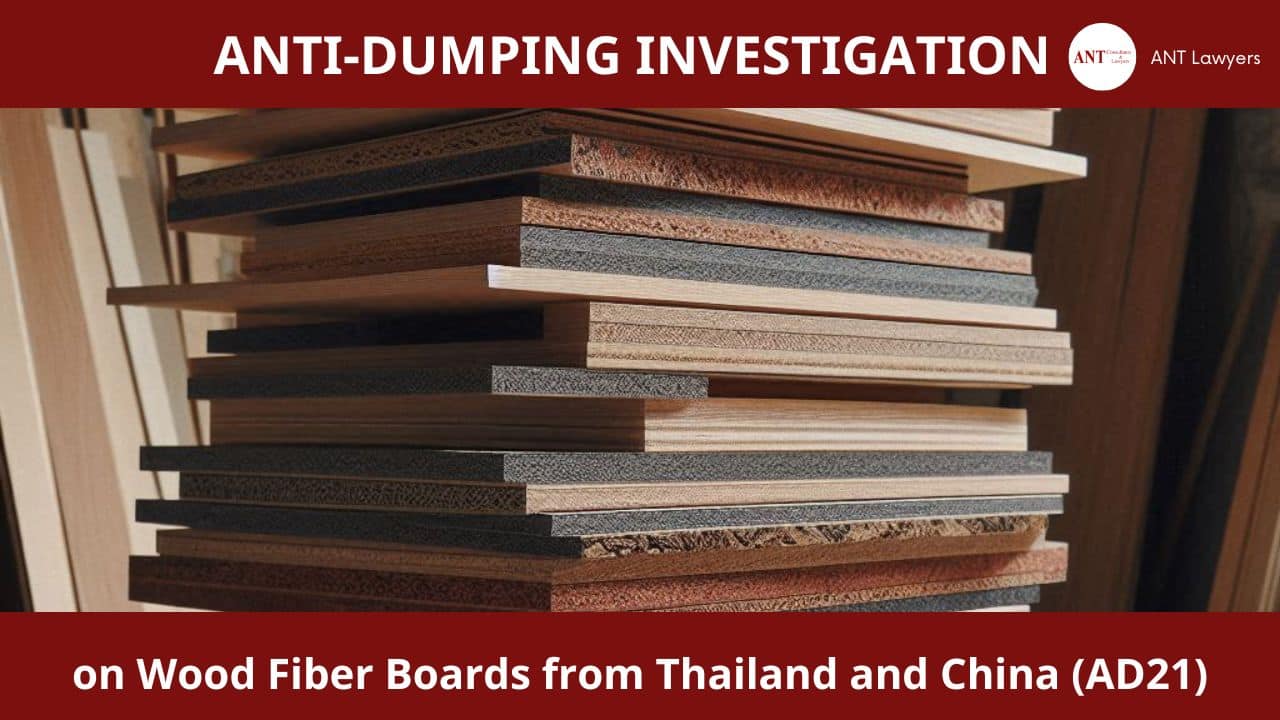
Anti-Dumping Investigation on Wood Fiber Boards from Thailand and China (AD21)

  On September 25, 2024, the Ministry of Industry and Trade officially initiated an anti-dumping investigation on wood fiber boards from Thailand and China (AD21) by issuing Decision No. 2549/QĐ-BCT. This investigation covers wood fiber boards originating from Thailand and China, specifically classified under HS codes 4411.12.00, 4411.13.00, 4411.14.00, 4411.92.00, 4411.93.00, and 4411.94.00. The investigation is conducted under case number AD21, marking a significant move to protect Vietnam’s domestic manufacturing sector.

Anti-Dumping Investigation on Wood Fiber Boards from Thailand and China (AD21)

The decision to launch the anti-dumping investigation on wood fiber boards from Thailand and China (AD21) was based on a thorough review of a dossier submitted by Vietnamese producers, which included major companies like VRG Dongwha MDF Joint Stock Company, Dongwha Vietnam Co., Ltd, VRG Quang Tri MDF Joint Stock Company, Kim Tin MDF Joint Stock Company, and Kim Tin MDF Dong Phu Joint Stock Company. This dossier was submitted on July 29, 2024, and after careful examination, it was deemed complete and valid, leading to the investigation’s initiation.

These domestic companies have raised concerns that wood fiber boards imported from Thailand and China are being sold at unfairly low prices, a practice commonly referred to as “dumping.” This practice has allegedly caused significant damage to Vietnam’s domestic wood fiber board industry, prompting the need for an anti-dumping investigation on wood fiber boards from Thailand and China (AD21).

Next Steps in the Anti-Dumping Investigation:

Following the launch of the anti-dumping investigation on wood fiber boards from Thailand and China (AD21), the Ministry of Industry and Trade will follow a set legal process to gather information and determine the validity of the claims. The process includes the following steps:

1.Issuing an investigation questionnaire: As part of the anti-dumping investigation on wood fiber boards from Thailand and China, the Ministry will send detailed questionnaires to relevant stakeholders, including exporters, importers, and domestic manufacturers. These questionnaires will collect data on pricing practices, production costs, and the potential impact on the Vietnamese market.

2.Verification of information: After receiving the responses, the Ministry will validate the information provided by the various parties. This step is crucial to ensure that the data used in the anti-dumping investigation on wood fiber boards from Thailand and China (AD21) is accurate, transparent, and reflects the real situation.

3.Temporary measures: If the preliminary findings of the anti-dumping investigation on wood fiber boards from Thailand and China (AD21) show strong evidence of dumping and significant damage to the domestic industry, the Ministry may impose temporary anti-dumping duties on the imported products. These measures aim to prevent further harm while the investigation is still ongoing.

4.Public consultations: To maintain transparency during the anti-dumping investigation on wood fiber boards from Thailand and China (AD21), the Ministry will organize public consultations. All parties involved will have the opportunity to present their case, exchange information, and submit evidence, ensuring that the investigation remains balanced and just.

5.Final determination: After completing the anti-dumping investigation on wood fiber boards from Thailand and China (AD21), the Ministry will issue a final determination. If the investigation confirms the allegations of dumping, anti-dumping duties will be officially imposed, safeguarding the domestic wood fiber board industry from unfair competition.

Investigation Process and Legal Procedures:

The anti-dumping investigation on wood fiber boards from Thailand and China (AD21) will follow a structured process in accordance with Vietnamese law. Below is an overview of the key steps involved:

1.Receiving and reviewing the dossier: The initial step involves domestic producers submitting a dossier requesting an anti-dumping investigation on wood fiber boards from Thailand and China (AD21). The Ministry will assess the dossier within 45 days to ensure it meets all legal requirements.

2.Initiating the investigation: If the dossier is approved, the Ministry will initiate the anti-dumping investigation on wood fiber boards from Thailand and China (AD21) within 60 days of receiving the complete application.

3.Preliminary investigation: A preliminary investigation will be conducted over a period of 90 to 150 days. The findings from this phase could lead to temporary anti-dumping duties if significant evidence is found during the anti-dumping investigation on wood fiber boards from Thailand and China.

4.Final investigation phase: The final phase of the anti-dumping investigation on wood fiber boards from Thailand and China must be completed within 12 months of the investigation’s initiation, though this period can be extended by an additional six months if needed.

5.Final conclusion: After completing the investigation, the Ministry will release its final conclusions. If dumping is confirmed, anti-dumping duties will be imposed for a period of five years, with the possibility of renewal if necessary.

  • Recommendations for Relevant Parties:

Businesses involved in the import, distribution, or use of the investigated products should register as interested parties during the anti-dumping investigation on wood fiber boards from Thailand and China (AD21). By doing so, they can protect their legal rights and provide essential information to ensure a fair investigation. Cooperation from all stakeholders is vital for the success and transparency of the anti-dumping investigation on wood fiber boards from Thailand and China.

About ANT Lawyers, a Law Firm in Vietnam

We help clients overcome cultural barriers and achieve their strategic and financial outcomes, while ensuring the best interest rate protection, risk mitigation and regulatory compliance. ANT lawyers has lawyers in Ho Chi Minh city, Hanoi,  and Danang, and will help customers in doing business in Vietnam.

Source: https://antlawyers.vn/update/anti-dumping-investigation-on-wood-fiber-boards-from-thailand-and-china.html

Thứ Tư, 2 tháng 10, 2024

7 Essential Steps for Seamlessly Opening a Corporate Bank Account in Vietnam

  Opening a corporate bank account in Vietnam is a crucial step for businesses looking to operate. However, the process can be both rewarding and challenging, depending on your knowledge of the local banking system, compliance requirements, and the overall business landscape.

Vietnam’s banking regulations, while improving over the years, still feature variations across different financial institutions, especially in terms of their Know Your Customer (KYC) policies, documentation requirements, and UBO (Ultimate Beneficial Owner) tracing.

The following will walk you through the essential steps of opening a corporate bank account in Vietnam and shed light on common obstacles that can hinder the process.


Why Opening a Corporate Bank Account in Vietnam is Critical

Whether you are a startup or a multinational enterprise, opening a corporate bank account in Vietnam is essential for conducting daily operations, managing expenses, and receiving payments from clients and partners, making payment and transferring money abroad.

It serves as the financial backbone of your business and is mandatory once you have set up company in Vietnam.

However, this process involves more than simply walking into a bank asking opening a corporate bank account in Vietnam. With each bank having different policies, some may offer more easy terms, while others follow strict guidelines.

In some cases, banks in Vietnam might even trace the Ultimate Beneficial Owner (UBO) to the individuals with the smallest interest, which may impact your selection of the right bank.

Key Benefits of Having a Corporate Bank Account in Vietnam

  • Facilitates business operations: Helps you manage operational expenses, payroll, and transactions in the local currency (VND).
  • Local credibility: Having a Vietnamese bank account provides local credibility and can improve relationships with suppliers and customers.
  • Financial transparency: Vietnamese banks offer services that enhance your ability to track and manage your financial transactions in accordance with local laws.

Challenges to Consider

  • KYC and compliance hurdles: Some banks enforce strict KYC (Know Your Customer) protocols, which can slow down the process of opening a corporate bank account in Vietnam.
  • UBO tracing: Depending on the bank, they may trace ownership up to individuals with minimal interests, which can complicate ownership structures.
  • Varying bank policies: Each bank has different policies for foreigners or companies with foreign shareholders, requiring a deep understanding of each bank’s specific guidelines.

Step 1: Ensure Your Company Is Fully Registered

Before you can begin the process of opening a corporate bank account in Vietnam, you must ensure that your company is fully registered and licensed to operate in the country. A corporate bank account can only be opened once your business entity is legally recognized.

Essential Documents for Company Registration

  • Business License: This is the certificate that proves your business is legally registered.
  • Investment Certificate: For foreign-owned companies, an investment certificate may be required, which demonstrates that the business has been approved for foreign investment.
  • Charter/Articles of Incorporation: This document outlines the company’s internal regulations, including ownership structure and operational guidelines.

Step 2: Choose the Right Bank for Opening a Corporate Bank Account in Vietnam

One of the most important decisions when opening a corporate bank account in Vietnam is selecting the right bank. Each financial institution has its unique set of policies, KYC requirements, and compliance checks. You will need to consider factors such as the bank’s reputation, services, and ease of conducting international transactions.

Local vs. International Banks

  • Local Banks: Local Vietnamese banks often provide easier access to local payment networks and relationships. They may also have more lenient policies for local companies.
  • International Banks: International banks have a more global presence and may offer better services for international transactions, though their KYC process can be more stringent.

Key Factors to Consider Opening a Corporate Bank Account in Vietnam

  • KYC Requirements: Some banks in Vietnam may impose strict Know Your Customer protocols, requiring detailed identification and verification of company owners and directors. Others may be more flexible, depending on their risk tolerance.
  • UBO Tracing: For banks with stricter compliance, Ultimate Beneficial Ownership (UBO) tracing can go deep into ownership structures, which can make the process cumbersome for companies with complex ownership.
  • Transaction Fees: Ensure that the bank offers competitive fees for local and international transfers.
  • Customer Service: Choose a bank with a solid reputation for offering good customer service, especially for foreign-owned businesses.

Step 3: Gather the Necessary Documentation Opening a Corporate Bank Account in Vietnam

Opening a corporate bank account in Vietnam requires an extensive set of documents, and missing even one document can delay the process significantly. It is critical to gather and prepare all necessary paperwork in advance to ensure a smooth experience.

Commonly Required Documents

  • Company Business License: Proof of company registration is mandatory.
  • Certificate of Incorporation: For foreign companies, a certificate of incorporation is usually required.
  • Charter of the Company: The company’s articles of incorporation or bylaws, detailing the business operations and ownership structure.
  • ID/Passport of Directors and Legal Representatives: Personal identification documents of the company’s directors and legal representatives.
  • Proof of Address: Often required for both the company and its owners.
  • UBO Documentation: Some banks will request detailed information about the Ultimate Beneficial Owner, including tracing ownership back to individuals with minor interests.
  • KYC Forms: Each bank will provide its own Know Your Customer forms that need to be completed by the company representatives.

Step 4: Navigating the KYC and Compliance Process Opening a Corporate Bank Account in Vietnam

KYC (Know Your Customer) is a mandatory requirement for opening a corporate bank account in Vietnam. It is a critical step designed to prevent illegal activities such as money laundering or fraud. Depending on the bank you choose, the KYC process can be straightforward or extremely stringent.

What to Expect from the KYC Process

  • Identity Verification: You will need to provide personal identification documents for the company’s directors and shareholders. In some cases, banks may request notarized copies.
  • Proof of Ownership: Banks will require a clear understanding of the company’s ownership structure, which can include submitting documentation on shareholders, directors, and ultimate beneficial owners.
  • UBO Scrutiny: For banks that have stricter compliance measures, the UBO tracing process may be quite exhaustive, requiring detailed personal information on all shareholders, even those with small stakes in the company.

How to Smooth the KYC Process

  • Complete Documentation: Ensure that all the required documents are ready before you visit the bank to prevent unnecessary delays.
  • Work with a Consultant: Engaging a local corporate services firm or legal consultant can help you navigate Vietnam’s complex banking regulations more effectively.
  • Choose the Right Bank: Some banks are known for having a smoother and faster KYC process. If your business ownership is straightforward, you may want to prioritize these banks.

Step 5: Understanding UBO Tracing

The Ultimate Beneficial Owner (UBO) tracing process involves identifying the individuals who ultimately own or control the company. While some banks in Vietnam have a less stringent approach, others require detailed information on every shareholder, regardless of how small their ownership stake is.

Step 6: Submit Your Application and Wait for Approval

Once you’ve gathered all the required documents, completed the KYC process, and navigated the UBO tracing, the final step is to submit your application. This involves submitting all paperwork to the bank’s corporate banking department, either in person or through an authorized representative.

Average Timeline

The time frame for opening a corporate bank account in Vietnam can vary. In general, the process can take anywhere from 1 to 3 weeks, depending on the bank and the complexity of your business structure.

  • Local Banks: Often faster and less complicated, typically taking 1 to 2 weeks.
  • International Banks: Due to stricter compliance measures, it can take longer—anywhere from 2 to 3 weeks.

Step 7: Post-Approval: Managing Your Corporate Bank Account

Once your corporate bank account is approved, you’ll receive confirmation, usually via email, along with your account details. From there, you can begin using the account for transactions, payroll, and operational expenses.

Important Features to Consider

  • Online Banking: Ensure your bank provides a user-friendly online banking platform for easy access to your accounts, especially if you’re handling international transactions.
  • Multiple Currencies: If you operate internationally, a bank that offers multi-currency accounts can simplify your financial management.
  • Support and Service: Make sure your bank provides adequate support, especially if you are a foreign investor who may need assistance in navigating local regulations.

About ANT Lawyers, a Law Firm in Vietnam

We help clients overcome cultural barriers and achieve their strategic and financial outcomes, while ensuring the best interest rate protection, risk mitigation and regulatory compliance. ANT lawyers has lawyers in Ho Chi Minh city, Hanoi,  and Danang, and will help customers in doing business in Vietnam.

Source: https://antlawyers.vn/update/opening-a-corporate-bank-account-in-vietnam.html

Thứ Ba, 1 tháng 10, 2024

9 Important Steps for Successfully Setting Up an Import Export Business in Vietnam

  Starting an import-export business in a foreign country can be challenging, because the difference of cultures, business practice, lack of trusted partners, difficulties to hire.

However, setting up an import export business in Vietnam offers exciting opportunities due to the country’s growing economy, strategic location, and booming trade sector.

Setting Up an Import Export Business in Vietnam: 9 steps

The following outlines nine powerful steps for foreign investors looking to penetrate Vietnam’s import-export market successfully.

Again, facing challenges also mean the competitors would face the same, and to sustain you have to have your owned roadmap help you turn your business ideas into reality in the promising market.

Why Vietnam?

Before delving into the steps, it’s essential to understand why setting up an import export business in Vietnam is an attractive option.

Vietnam has become a major player in the global supply chain, thanks to its strong export-led economic growth.

The country boasts trade agreements with major economies, including the United States, the European Union, and several Asian nations.

Furthermore, its relatively low labour costs, favorable investment environment, and improving infrastructure make it an appealing location for business owners looking to access both regional and global markets.

Step 1: Research the Market and Your Business Sector

The first and most critical step in setting up an import export business in Vietnam is conducting thorough market research.

Understanding the local market, identifying your target audience, and analyzing competitors will allow you to develop a strategic plan for entering the market.

Vietnam has various high-potential sectors for import-export businesses, including electronics, textiles, agricultural products, and machinery.

  • Key Considerations

Identify demand: Are your products or services in demand in Vietnam or internationally?

Trade regulations: What restrictions or tariffs are in place for importing or exporting specific goods?

Competitors: Who are the major competitors in your industry?

Market research is also essential in determining whether you’ll focus on importing goods into Vietnam, exporting Vietnamese products abroad, or both. For example, Vietnam is known for its export of agricultural products like rice, coffee, and seafood, while it imports machinery and electronics.

Step 2: Choose the Right Business Structure

The second critical step in setting up an import export business in Vietnam is choosing the right business structure.

As a foreign investor, there are several business structures you can establish, such as a 100% foreign-owned enterprise (FOE), or a joint venture.

  • Key Business Structure Options:

100% Foreign-Owned Enterprise (FOE): This allows full ownership and control, which is ideal for businesses wanting autonomy.

Joint Venture: If you’re looking for local expertise and partnerships, a joint venture may be the way to go. This structure allows you to partner with a Vietnamese entity.

Your choice of business structure will depend on your long-term goals, the level of control you wish to maintain, and the amount of investment you’re willing to commit.

Step 3: Understand Vietnam’s Legal and Regulatory Environment

Navigating Vietnam’s legal and regulatory environment is one of the more complex aspects of setting up an import export business in Vietnam. Vietnam’s government has implemented a number of laws and decrees to regulate foreign businesses, and understanding these rules is vital for smooth operations.

  • Important Regulations to Consider:

Investment Law: This law outlines the types of business activities open to foreign investors and any conditions that may apply.

Enterprise Law: Governs the establishment and operation of businesses in Vietnam.

Tax Obligations: Ensure you are familiar with tax rates for foreign-owned businesses, including corporate income tax (CIT), value-added tax (VAT), and import-export duties.

Additionally, some industries in Vietnam require special licenses or permits.

Step 4: Register Your Business and Obtain Licenses

Once you’ve chosen your business structure and familiarized yourself with Vietnam’s regulatory environment, the next step in setting up an import export business in Vietnam is registering your company. This involves submitting the necessary documents to Vietnam’s Department of Planning and Investment (DPI) and receiving approval for your business activities.

  • Documents Needed:

Investment registration certificate (IRC): This outlines your business activities, capital contribution, and ownership structure.

Enterprise registration certificate (ERC): Officially establishes your company as a legal entity in Vietnam.

Step 5: Open a Bank Account and Manage Capital Requirements

Opening a corporate bank account in Vietnam is a critical step in setting up foreign owned import export business in Vietnam. Vietnam has numerous domestic and international banks, offering various services for foreign investors. Choose a bank that aligns with your financial needs and business goals.

Step 6: Secure a Physical Office or Warehouse

Another crucial step in setting up an import export business in Vietnam is securing a physical office or warehouse. Having a physical presence is necessary for business registration, as the Vietnamese government requires businesses to have a registered office address.

  • Leasing Options:

You can either lease office space in a business park or rent a warehouse facility, depending on the nature of your business.

Vietnam offers numerous free trade zones and industrial parks, which may provide tax incentives or reduced customs duties for businesses involved in manufacturing or processing goods for export.

Finding the right location is important not only for operational efficiency but also for complying with the legal requirements of registering your business.

Step 7: Hire Qualified Staff and Understand Local Labor Laws

Human resources are a key component of any successful business, and setting up an import export business in Vietnam is no exception. Vietnam’s labor market is dynamic, and finding the right talent can help your business thrive.

  • Key Considerations:

Labor Laws: Vietnam’s labor laws protect both employers and employees, with guidelines on minimum wage, working hours, and social insurance requirements. Foreign businesses are required to comply with these laws when hiring both local and expatriate workers.

Work Permits: If you plan to hire foreign staff, they will need work permits, which require specific qualifications and approvals.

Ensuring that you comply with labor laws from the outset will prevent legal complications and help foster a productive workforce.

Step 8: Develop a Strong Supply Chain and Logistics Network

Efficient supply chain management is critical to the success of any import-export business. In setting up an import export business in Vietnam, you will need to establish strong relationships with suppliers, manufacturers, and logistics companies.

  • Key Considerations:

Shipping and Customs: Ensure that you understand the import-export procedures, customs duties, and taxes associated with your goods.

Logistics Partners: Partner with reliable logistics companies for shipping, warehousing, and distribution. Vietnam has a developing transportation infrastructure, with deep-water ports, highways, and air freight services connecting it to global markets.

Having a seamless logistics network will help you manage costs and ensure timely delivery of goods.

Step 9: Stay Compliant and Adapt to Changes

The final and ongoing step in setting up foreign owned import export business in Vietnam is staying compliant with local laws and adapting to changes. Vietnam is a rapidly evolving market, and staying updated on changes in trade policies, tax regulations, or labor laws is essential.

  • Compliance Considerations:

Tax Compliance: Ensure that you are up to date on all tax filings and payments. Vietnam’s tax system can be complex, and working with a local accountant or tax advisor can help you stay compliant.

Stay Informed: Regularly review Vietnam’s trade policies and free trade agreements, as these can offer significant advantages or challenges to your business.

By staying compliant and flexible, your business will be better positioned to adapt to the ever-changing global trade environment.

About ANT Lawyers, a Law Firm in Vietnam

We help clients overcome cultural barriers and achieve their strategic and financial outcomes, while ensuring the best interest rate protection, risk mitigation and regulatory compliance. ANT lawyers has lawyers in Ho Chi Minh city, Hanoi,  and Danang, and will help customers in doing business in Vietnam.

Source: https://antlawyers.vn/update/setting-up-an-import-export-business-in-vietnam.html